


Melamine vs. PET vs. UV vs. Lacquer: How to Choose a Cabinet Door Finish
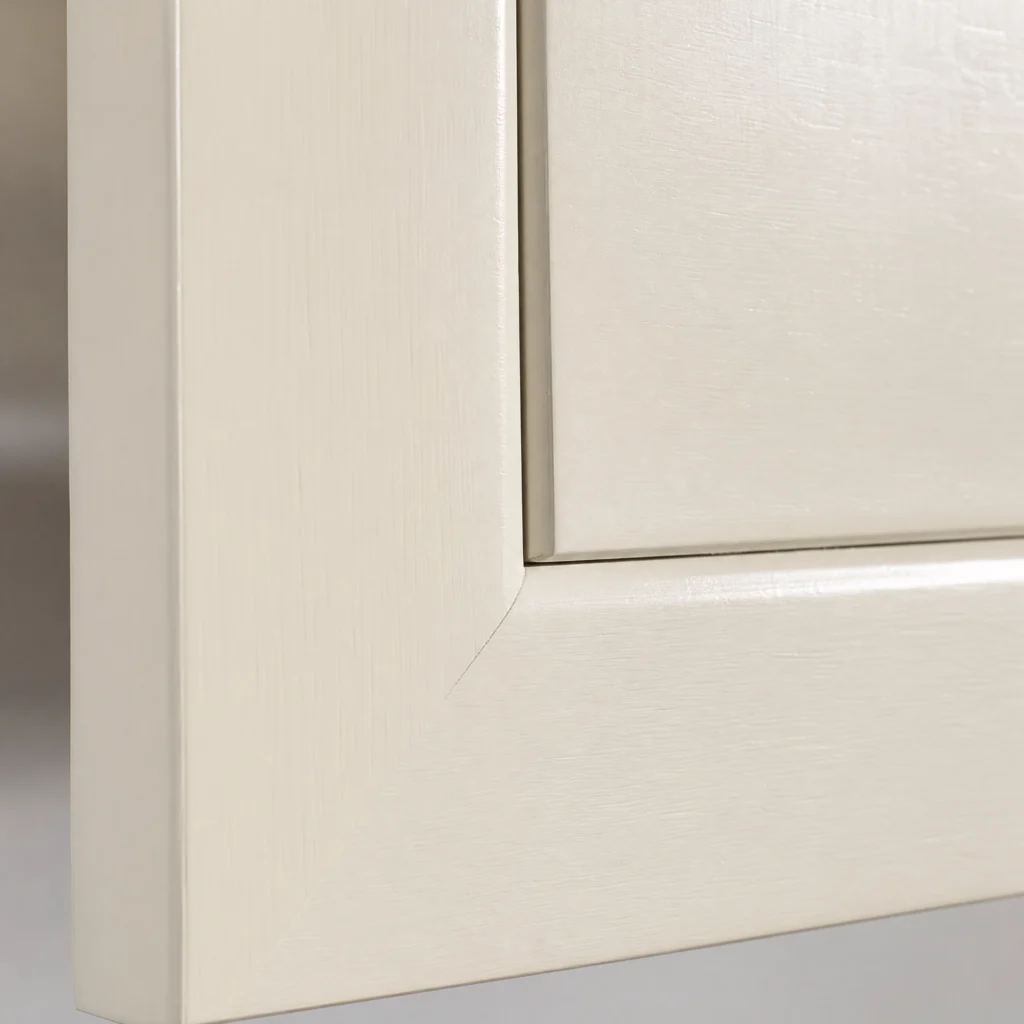
Choose melamine if you want the lowest price and a wood look, PET if you want a sleek gloss or matte solid color that’s easy to wipe down, UV if you want a very hard, mirror-like high gloss, and lacquer if you want a true painted color, a Shaker profile or the option to touch up small chips. If you’re torn, decide by who uses the kitchen and how much fingerprint-wiping you’ll tolerate.
Below: what each finish is, how it handles scratches, steam, sunlight and fingerprints, what it costs at Cabford, and how to clean it. Durability notes describe each finish type in general, based on the cited sources; specifics vary by manufacturer.
The short answer
Melamine is the budget-friendly, scratch- and stain-resistant choice for wood looks and textured solids. PET is a smooth gloss or matte film on MDF that’s easy to clean and resists fading. UV is a lamp-cured coating with a very hard, very glossy surface. Lacquer is a sprayed paint finish with the widest color range and the only practical touch-up option, but it can chip on impact.
- Lowest cost: melamine. About 7–9% more: PET. Premium tier: UV and lacquer (Cabford RTA prices, October 2026).
- Busy household: matte PET or textured melamine hide fingerprints and everyday marks best.
- Before you order, get door samples (11″ × 15″ or 6″ × 6″, from $5.99, refundable) and look at them in your own kitchen light.
Cabinet door finishes compared
| Melamine | PET | UV | Lacquer | |
|---|---|---|---|---|
| What it is / core | Resin-soaked decor paper fused to particleboard (MFC) | Polyethylene terephthalate film laminated to MDF | Coating cured instantly by UV lamps, on MDF | Multi-coat sprayed paint finish on MDF |
| Look | Woodgrains, textured and flat solids | Smooth solid colors, high gloss or super-matte | Deep, mirror-like high gloss | Any color; seamless painted look; gloss to matte |
| Scratch resistance | Good surface hardness; edges can chip | Good; gloss shows fine scratches more | Very hard surface; gloss still shows marks | Moderate; chips on hard impact |
| Heat and moisture | Surface resists water; core swells if water gets past a damaged edge | Film is water-impermeable; avoid direct heat and steam | Hard film; keep steam and heat off the edges | Avoid steam and standing water; dry spills promptly |
| Fading and yellowing | Printed decor typically resists light well | Makers list UV stability | High color stability | Depends on chemistry; some lacquers yellow |
| Cleaning | Easy; mild cleaner | Easy; non-abrasive cleaner for plastics | Easy; microfiber, don’t over-rub | Easy; microfiber, wipe stains quickly |
| Repairability | Hard to repair invisibly | Typically replace the door | Hard to spot-repair invisibly | Small chips can be touched up |
| Relative price at Cabford | Lowest | About 7–9% more | Premium | Premium |
| Best for | Budgets, rentals, wood looks | Modern solids, busy families (matte) | Bold high-gloss color | Painted colors, Shaker, touch-ups |
The finish changes the doors and drawer fronts, not the cabinet: every Cabford box is frameless 3/4″ plywood with soft-close hinges and glides and a 5-year limited warranty.
What is a melamine cabinet finish?
Melamine doors are made from decorative paper saturated with melamine resin and fused onto a particleboard or fiberboard core under heat and pressure, according to Decor Cabinets’ guide to thermally fused laminate (2026 update). Cabford’s melamine doors are MFC: melamine-faced chipboard with a particleboard core.
The surface is hard and resists scratches and stains, and it is generally more budget-friendly than solid wood, per the same guide. Because the color is printed into the paper, Cucine Lube’s melamine door guide (2026) notes that light resistance tends to be better than natural wood’s.
The weak point is the edge. Cucine Lube warns that edges exposed to excess heat, water and humidity can weaken, and particleboard swells once water gets past the surface: in water-exposure tests reported by CLM Magazine (2011), the particleboard swelled once water penetrated a joint. Chips are also hard to fix: Decor Cabinets notes that melamine is harder to repair than wood or paint.
Best for: budget remodels, rentals and wood looks. Cabford’s 10 melamine collections include six Oakmere Slab woodgrains, Cavera Rift Quartz Slab, Celvara Parsley Slab, and the Willowen Ebony Walnut and Rift Cut White Oak Shaker doors.
What are PET cabinet doors?
PET (polyethylene terephthalate) doors have a thin plastic film bonded to an MDF core. Cucine Lube’s PET door guide (2026) describes a 0.3–0.5 mm PET sheet on MDF that resists impacts, scratches, stains, light and heat and is fully waterproof against water-based liquids. Panel maker Kronospan (2026) lists UV stability, scrub resistance and easy cleaning for its ultra-matte PET, and some super-matte PET panels, such as Titus Tekform’s OptiMatt (2026), are marketed with anti-fingerprint properties.
The trade-offs: PET is a film, not paint, so deep damage typically means replacing the door, and Cucine Lube advises keeping direct heat and steam away.
Best for: modern kitchens that want a clean solid color without the premium price. Cabford’s five PET collections are all Avelora Slab doors: Glossy White, Glossy Gray, Matte White, Matte Grey and Matte Ash.
What is a UV cabinet finish?
A UV finish is a liquid coating hardened by ultraviolet lamps instead of air-drying. Cucine Lube’s UV door guide (2026) describes the cured film as very hard, highly resistant to scratches and wear, and stable in color over time, with an extra-glossy option rated at 95 gloss. Because UV formulations are very high in solids, the industry group RadTech (2026) describes them as low to zero VOC.
The same guide cautions that knocks and sharp objects can still damage the film and that heat, water and steam should be kept off the edges. And like any high gloss, it shows fingerprints more than matte.
Best for: homeowners who want a bold, reflective color statement. Cabford’s UV collection is Mariven Agua Marina Slab, a blue slab door.
What is a lacquer cabinet finish?
Lacquer doors are painted: the MDF panel is sprayed with coats of lacquer (typically acrylic or polyurethane resins, per Cucine Lube’s lacquered door guide, 2026), so every face and edge gets the same continuous finish. That’s why lacquer offers the widest range of colors and sheens and suits shaped doors like Shaker.
Its weak spot is impact. Cucine Lube notes that knocks and sharp objects can damage the paint film, but small scrapes can be touched up with a touch-up bottle. Yellowing depends on the chemistry: Fine Woodworking (2005) explains that nitrocellulose lacquer yellows as it ages, acrylic resins stay clear, and catalyzed lacquers offer much better water, chemical and abrasion resistance. Ask any brand which type it uses.
Best for: painted-color kitchens, Shaker doors and anyone who values repairability. Cabford’s nine lacquer collections range from Everlyn White Shaker and Bravelyn Shine Leaden Grey Slab to Nexora Glow Toile Red Slab and the handleless Valessia Lacquer White J-Handle door.
Gloss or matte: which is easier to live with?
Gloss is easier to wipe; matte is easier to look at day to day. Sherwin-Williams (2026) notes that sheen draws attention to a surface, including the smallest flaws, while high-sheen surfaces are typically easier to keep clean. The same logic applies to cabinet doors:
- High gloss bounces light around a small or dark kitchen, but fingerprints, smudges and fine scratches show, especially on dark colors.
- Matte hides fingerprints and small marks better. Some super-matte surfaces can show oily smudges, so wipe them with a damp cloth rather than polishing.
- Either way, don’t over-rub. Cucine Lube warns that excessive rubbing can make matte look shiny and give gloss an uneven look.
How much does each finish cost?
Here’s how the finishes compare on Cabford RTA prices as of October 2026. Check current RTA prices before you order.
| Finish | 30″ double-door base cabinet | Basic Kitchen 10×10 bundle (9 cabinets)* | Tier |
|---|---|---|---|
| Melamine | $491.04 | $3,312.00 | Lowest price |
| PET | $527.04 | $3,592.80 | About 7–9% more |
| UV | $559.44 | From $3,865.68 | Premium |
| Lacquer | $559.44 | From $3,865.68 | Premium |
*Bundle prices are before the current 20% bundle discount and cover the 9 cabinets only; filler strips, end panels and toe kick are extra. In these examples UV and lacquer cost the same, but that won’t always be true for every cabinet or collection.
On the 10×10 bundle, PET added about $281 over melamine and UV or lacquer about $554, before the discount. Assembled cabinets add $75 per cabinet regardless of finish (RTA vs. assembled). For the full budget picture, see what a new kitchen costs.
Can't decide between two finishes?
Get a free 3D design with an itemized cabinet list within 72 hours.
Which finish is best for your kitchen?
- Rentals, flips and tight budgets: melamine. It’s the lowest-priced finish, resists scratches and stains, and the woodgrains look at home in most rooms. Keep the sink and dishwasher area dry and fix leaks quickly.
- Families with young kids: matte PET or textured melamine. Avelora Matte White, Matte Grey and Matte Ash hide fingerprints better than gloss and wipe clean easily. Textured melamine also disguises everyday scuffs.
- A high-gloss modern look: PET gloss, UV or lacquer. Avelora Glossy White or Glossy Gray is the budget route to gloss; Mariven Agua Marina is the UV option for saturated color; lacquer adds high-gloss whites, greys and colors.
- A painted color or Shaker door: lacquer. Choose it for a painted Shaker (Everlyn White, Novara Shine Moon Light, Lumiera Glow Purplish Blue) or a color like Nexora Glow Toile Red.
- A wood look: melamine. Oakmere, Willowen Ebony Walnut Shaker and Willowen Rift Cut White Oak Shaker cover light to dark woods. The lacquer lineup also includes Meadowra Natural Oak Slab, so order both samples if you want to compare.
How to clean and care for each finish
The basics are the same for all four, per the Cucine Lube guides cited above:
- Use a soft microfiber cloth, slightly damp, with a mild liquid detergent for greasy spots.
- Wipe dry afterward to prevent streaks and keep water off the edges.
- Skip abrasives and harsh chemicals: no scouring pads, abrasive creams, bleach, ammonia or acetone.
- Wipe spills promptly. Coffee, red wine and ink can leave permanent marks on light lacquered and UV surfaces.
- Keep steam and heat away from doors. Run the range hood while cooking, don’t use high-temperature steam cleaners on doors, and don’t let condensation sit on edges.
- Limit strong direct sun on lacquered and UV doors with blinds or curtains.
For repairs, lacquer is the only finish you can realistically touch up at home. On melamine, PET and UV, a deep chip usually can’t be repaired invisibly, so replacing the door is the clean fix.
Why you should order door samples before you decide
Photos can’t show sheen, texture or how a color shifts through the day. A door sample can. From $5.99 and refundable, Cabford door samples are the cheapest way to avoid an expensive mistake.
- Order your top two or three finishes and compare them side by side in your kitchen.
- Check them morning and evening, under your ceiling lights and next to your flooring.
- Touch them to see how fingerprints show on gloss versus matte.
Frequently asked questions
What is the most durable kitchen cabinet door finish?
For surface hardness, UV-cured coatings are typically described as the hardest of the four, and melamine and PET also resist everyday scratches and stains well. Lacquer is the most likely to chip on impact, but it’s also the only one you can easily touch up. Durability varies by manufacturer, so compare samples rather than labels.
Is melamine or PET better for kitchen cabinets?
Melamine costs less and comes in woodgrains and textures, but its particleboard core can swell if water gets past a damaged edge. PET costs about 7–9% more at Cabford, sits on an MDF core and suits smooth gloss or matte solid colors. Choose melamine for wood looks on a budget and PET for sleek solid colors.
Do high-gloss cabinets show fingerprints?
Yes. High-gloss surfaces reflect light, so fingerprints, smudges and fine scratches are more visible, especially on dark colors. Matte finishes hide them better, though they can still show oily marks that need a damp-cloth wipe.
Does lacquer turn yellow over time?
It depends on the lacquer. Nitrocellulose lacquer yellows as it ages, while acrylic resins stay clear, and catalyzed lacquers are more resistant to water, chemicals and abrasion. Keeping lacquered doors out of strong, prolonged direct sun also helps.
Can you repair a chipped cabinet door?
Lacquer is the easiest to repair: small scrapes can be filled with matching touch-up paint. Chips in melamine, PET and UV finishes are hard to repair invisibly, so the usual fix is a replacement door.
Are Cabford cabinet boxes the same for every finish?
Yes. Every collection uses 3/4″ plywood boxes, soft-close hinges and drawer glides, and the same 5-year limited warranty. Melamine doors have a particleboard (MFC) core; PET, UV and lacquer doors have MDF cores.
The bottom line
There’s no single best cabinet door finish, only the best fit for your budget and household. Melamine is the value pick and the go-to for wood looks; PET gives you sleek gloss or fingerprint-friendly matte solids for a little more; UV delivers a very hard, high-gloss surface; and lacquer gives you painted color, Shaker profiles and touch-up repairs at the premium tier. Narrow it to two or three, then order refundable door samples and live with them for a few days. When you’re ready, request a free 3D design, browse RTA cabinets or assembled cabinets, check cabinet sizes and layout, or find more answers in our FAQ.


